International Schools in Frankfurt RheinMain
Education Options for Expat Families
Education Options for Expat Families
The region offers a dense yet well‑organized network of international schools, bilingual providers and international kindergartens, so families can find the right fit within one compact region. These established school communities are used to welcoming expat families and include options up to the French Baccalauréat as well as a dedicated Japanese school, making it easy to maintain specific national curricula.
Students learn in English or bilingual environments and follow internationally recognized pathways such as the International Baccalaureate (IB), British A Levels, American/AP programs and selected national diplomas, ensuring long‑term academic continuity. They join truly multicultural cohorts that are familiar with international moves, helping children build confidence, friendships and a sense of belonging from the very first weeks.
One of Germany’s largest
international school clusters
20+ international and bilingual schools in one metropolitan region
Globally recognized pathways: IB, IGCSE/A Levels, U.S. High School Diploma/AP, plus French and Japanese options
Truly global community: an established expat hub with 180+ nationalities living and working together
Convenient locations: campuses typically within 20–35 minutes of central Frankfurt and key residential areas
Enrichment beyond the classroom: weekend language and cultural programs support heritage and global perspectives
Education is a decisive factor in relocation decisions. For international professionals, schooling is often the first filter when choosing where to live. Companies assess the availability of suitable international education, while families typically research schools before selecting a residential location.
A strong international education ecosystem is therefore essential infrastructure for global talent, enabling smooth transitions for relocating families and supporting a region’s long-term attractiveness.

Relocating to a new country with children can be complex, yet Frankfurt RheinMain is one of Germany’s smoothest regions for international transitions. English is widely spoken, making it easy to get by in everyday life from day one:
As an established expat region with exceptional global connectivity, the area benefits from Frankfurt Airport, one of the world’s most connected aviation hubs offering direct access to major international destinations.
International families often settle in communities such as Frankfurt, Bad Homburg, Kronberg, Königstein, Bad Soden, Oberursel and Wiesbaden, valued for their quality of life, green surroundings and proximity to international schools.
The region also offers an environment where expats quickly feel at home:
Popular sports like rugby, cricket and American football further strengthen community ties and create immediate social belonging.
International schools in Frankfurt RheinMain welcome students with similar relocation experiences.
They support:

Frankfurt RheinMain offers one of Germany’s most concentrated and diverse international school landscapes, giving families exceptional choice within a single, well-connected metropolitan region. Discover and compare school locations on an interactive map.
We would like to point out that data is transmitted to Google when the map is displayed. Further information can be found in our privacy policy.
This density is a major advantage for relocating families: it allows them to compare curricula, school cultures, class sizes and campus environments without facing long commutes or fragmented options — a rarity in Germany and a key factor for families managing international transitions.
Many schools accept applications year round, depending on availability, and their admissions teams are experienced in supporting families relocating at short notice. They understand the timelines, questions and uncertainties that come with global mobility, offering guidance that makes the process significantly easier for both children and parents.
Discover the 20+ international schools in the region
The region provides a wide range of globally recognized pathways:
IB
International Baccalaureate
IGCSE / A Levels
British curriculum
High School Diploma / AP
American curriculum
At some schools, additional national or language-based options may also be available, including French- or Japanese-related curricula or language tracks. Most international schools teach primarily in English and also offer German language learning, supporting both academic continuity and local integration.
Families with younger children will find a wide selection of international and bilingual kindergartens across the region.
Popular approaches include:
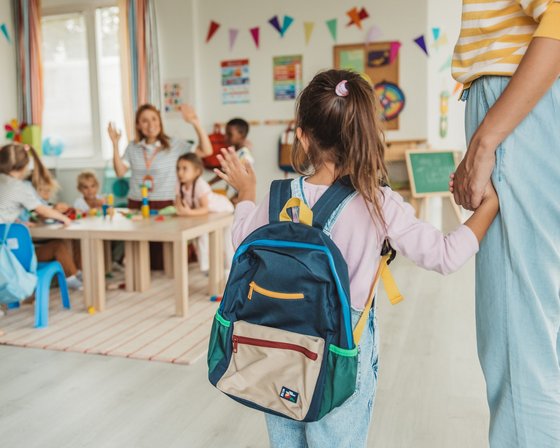
International families find welcoming communities across Frankfurt RheinMain.
Frankfurt offers an urban lifestyle close to international employers, culture and parks — with often walkable distances between offices, city life, schools and leisure activities, making everyday logistics remarkably simple.
The Taunus communities — Oberursel, Kronberg, Königstein, Bad Homburg — appeal with green surroundings and short commutes to several international schools, complemented by strong family infrastructure.
Wiesbaden combines historic character with a more composed, high-quality living environment, supported by established international networks and appeal for diplomatic households — complemented by a short commute to Mainz and immediate access to the Rheingau for refined leisure and outdoor pursuits.
Region‑wide, families benefit from excellent transport links, predictable commute times, high quality of life and international amenities (global restaurants, supermarkets, rugby/cricket, bilingual service providers) that make everyday life easy and help newcomers feel at home quickly.
For international families, schools in Frankfurt RheinMain quickly become the anchor of daily life.
Children settle fast, routines take shape and connections form naturally through parent networks, sports and extracurricular programs. International events add a sense of continuity across cultures.
Structured onboarding, parent ambassadors and reliable after-school care reduce friction early — creating stability and a genuine sense of arrival.